This installation had stretched 10 meters across the art studio, commanding the space with its scale. When visitors opened the studio door, a pulley system came to life, slowly lifting pallets of shredded remnants from a previous durational performance piece. The suspended fragments floated in mid-air, traced the invisible history of the earlier piece, and transformed the studio into a living archive of movement, sound, and material memory.
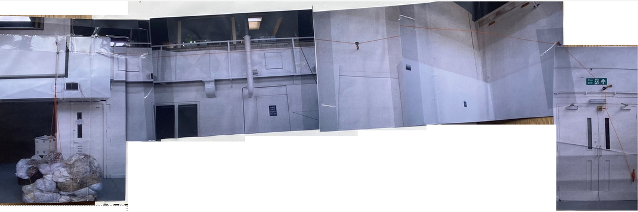
10-meter pulley
fabric, paper, metal, wood
2009
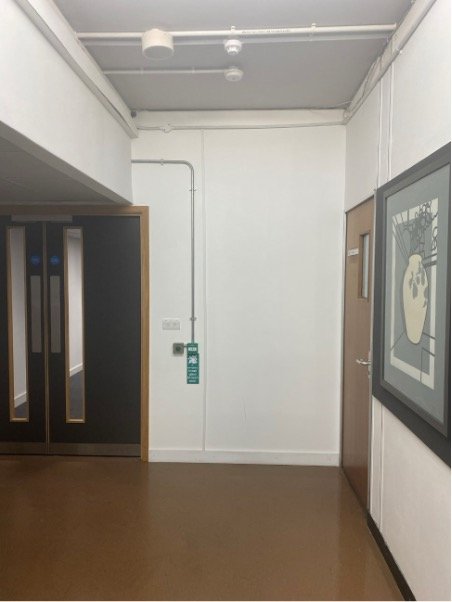
The Pipe and The Casing
plastic, metal
2024
The installations cord-pull switches, plastic piping, electric casing, and cabling were deliberately easy to overlook.
They lacked a ‘wow’ factor and had no practical purpose: the switches didn’t turn on lights, the piping carried nothing, the casing protected nothing, and the cabling carried no electricity.
Yet, once seen, viewers immediately asked, “What does it do?”—a question rarely posed in an art exhibition, where attention usually focuses on aesthetics, form, colour, or meaning.
The Cable
plastic, metal
2024
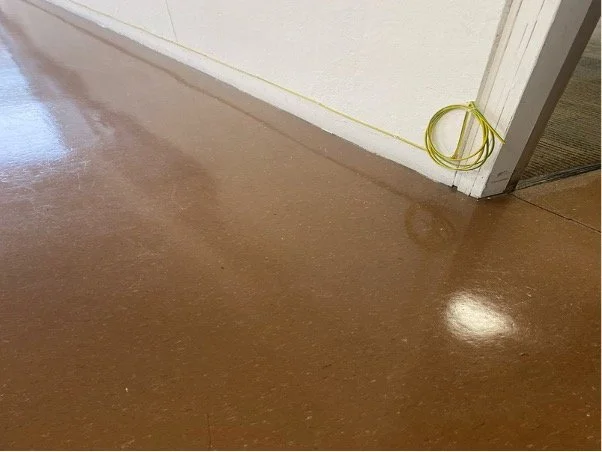
Creating the work required careful collaboration, negotiating space with fellow artists.
On the surface, this negotiation might seem functional, a means to ensure the exhibition is complete—but it was much more. It involved dialogue not just with the architecture of the space, but with the other artists’ work.
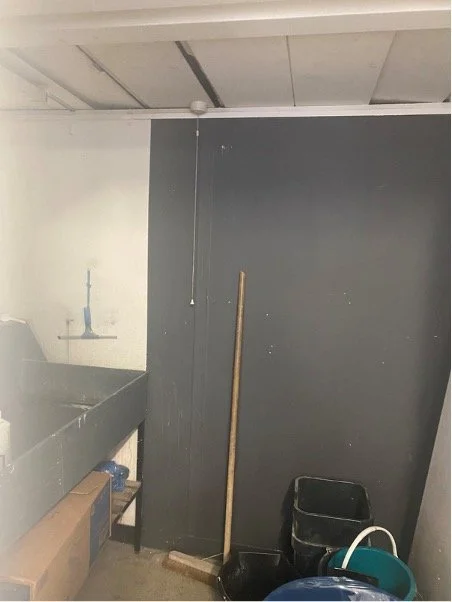
The Pull Cord Switch
fabric, metal, plastic
2024
Making the installation alongside others, then placing it so it is everywhere and nowhere, enacted a subtle form of negotiation that transcends mere spatial logistics; it is a collaborative process embedded in both the material and social fabric of the exhibition.
This took shape as an exchange of ideas between myself and fellow artists.
Although the work was organized around the installation, our discussions often veered into collaborative—and sometimes co-creative—dialogue about the very work we were making.
The structures and practical practices developed in the studio space were integral to co-creating the work, and this became even more crucial in an open-plan environment, where negotiation, shared decisions, and responsiveness shaped both the process and the final installation.
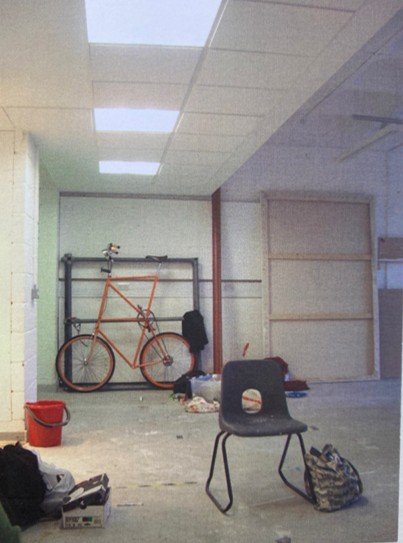
1 Red Bucket
plastic, cardboard
2008
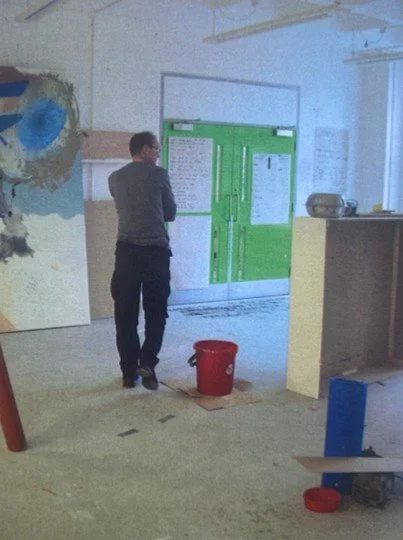
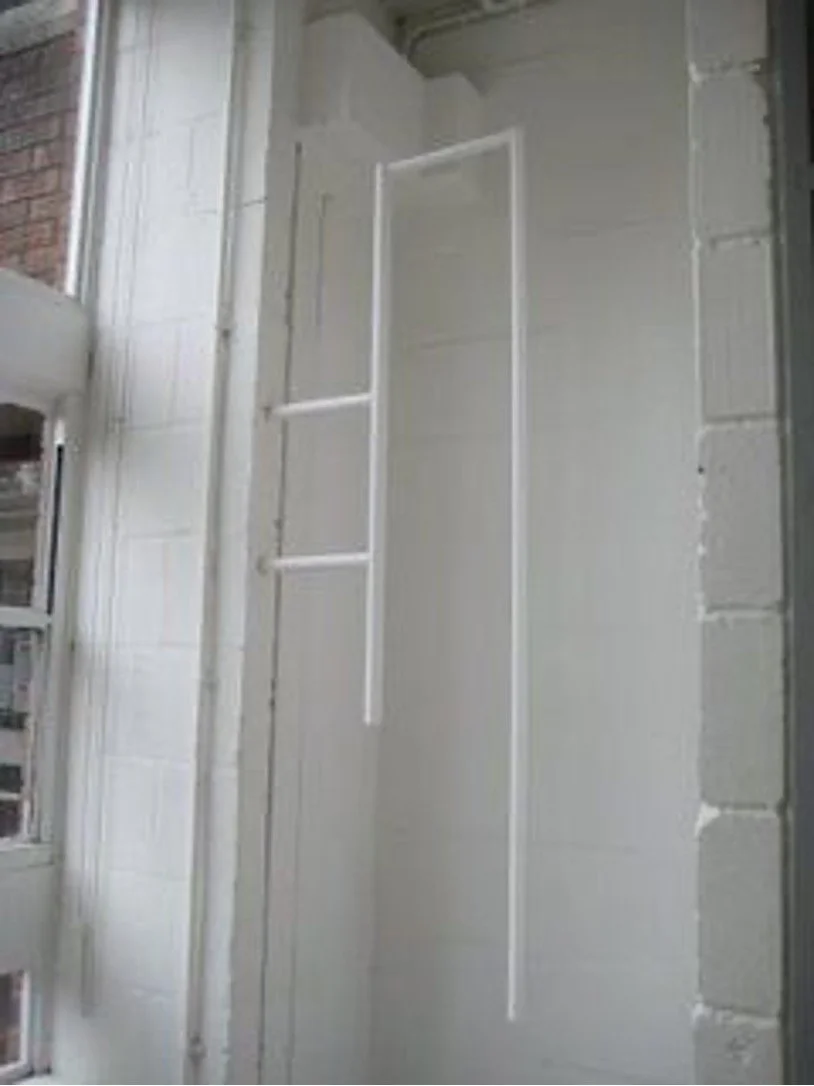
The Pipe
metal, paint
2008
“You wouldn't be wrong to miss out Ana Sekulic's work in this gallery space. Her contribution to the show was a clever reinterpretation of the white piping that surrounds the space. The work is easy to overlook; a cursory glance around might lead the viewer to believe there is an error in the exhibition map.
She seems to give a clear nod to work by Susan Collis, who's practise involves the viewer to discover more about her objects that at first glance appear ordinary and unexceptional. When you learn more, you realise her concerns, for example; The Oyster's Our World (2004) first appears to be a well used wooden step ladder, on closer inspection the paint drips and splatters are in fact painstakingly inlaid mother of pearl, coral, opal and diamond. She is interested in the shift of perception that takes place upon discovery of this.
Unlike Collis' work, Sekulic's work is as simple as it looks. There is no hidden agenda, and no wow factor as I think Collis' work has. Essentially this makes Sekulic's work more worthwhile, as she doesn't conform to this formula of value that Collis does. Her works are clever, and produced incredibly well but once you've seen one, you've seen them all.”
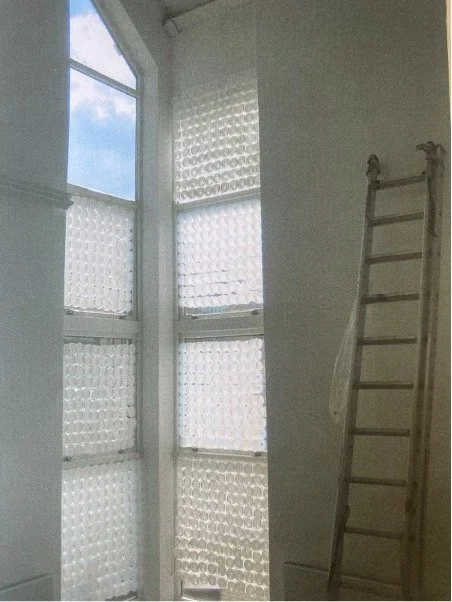
4,466 Plastic Cup Lids
plastic, glue, blue tack
2008
My initial intention was to create long-duration performance pieces around the joining 4,466 cup lids. Instead, the long-duration performance pieces raised questions about installation and became the starting point of my curiosity about the functions of a gallery space—particularly when putting together a show with other artists.
I made the installation on-site, spending many hours in the gallery space. Traditional gallery setups usually allocate square footage or a perimeter to each artist, often in equal quantities. However, this piece occupied a space that had been completely overlooked and was considered unwanted during our initial gallery space allocation discussions.
It was also a piece that, in the end, ended up controlling most of the lighting in the gallery.