Online Global Arts Day
I co-created an Online Global Arts Day to make sure children could still experience exciting and meaningful art while learning from home. Working across a federation of six primary schools, the project reached around 1,700 children and involved training and supporting 60 teachers to deliver creative, open-ended activities in their own classrooms.
The project introduced children to conceptual art, performance, sound, moving image and collaborative making in ways that felt accessible and playful. Every activity used simple, affordable materials that could be found in almost any home, so every child could take part without needing specialist equipment or expensive art materials. I wanted to show that great art doesn't depend on what you have, but on curiosity, imagination and a willingness to experiment.
Teachers were part of the creative process too. Rather than following step-by-step instructions, they explored ideas alongside the children and were encouraged to adapt activities to suit their own classes. This created opportunities for genuine co-creation, where children, teachers and artists learned from one another and shaped the work together.
The project showed that even during a time of isolation, it was possible to build creative communities, encourage risk-taking and make contemporary art accessible to everyone. It reinforced my belief that the most meaningful art experiences come from collaboration, shared exploration and giving people the confidence to see everyday materials in new ways.
The Art
Sculptural, Visual and Audio Collaborative Online Global Art Day Performance, 2020, 00:13
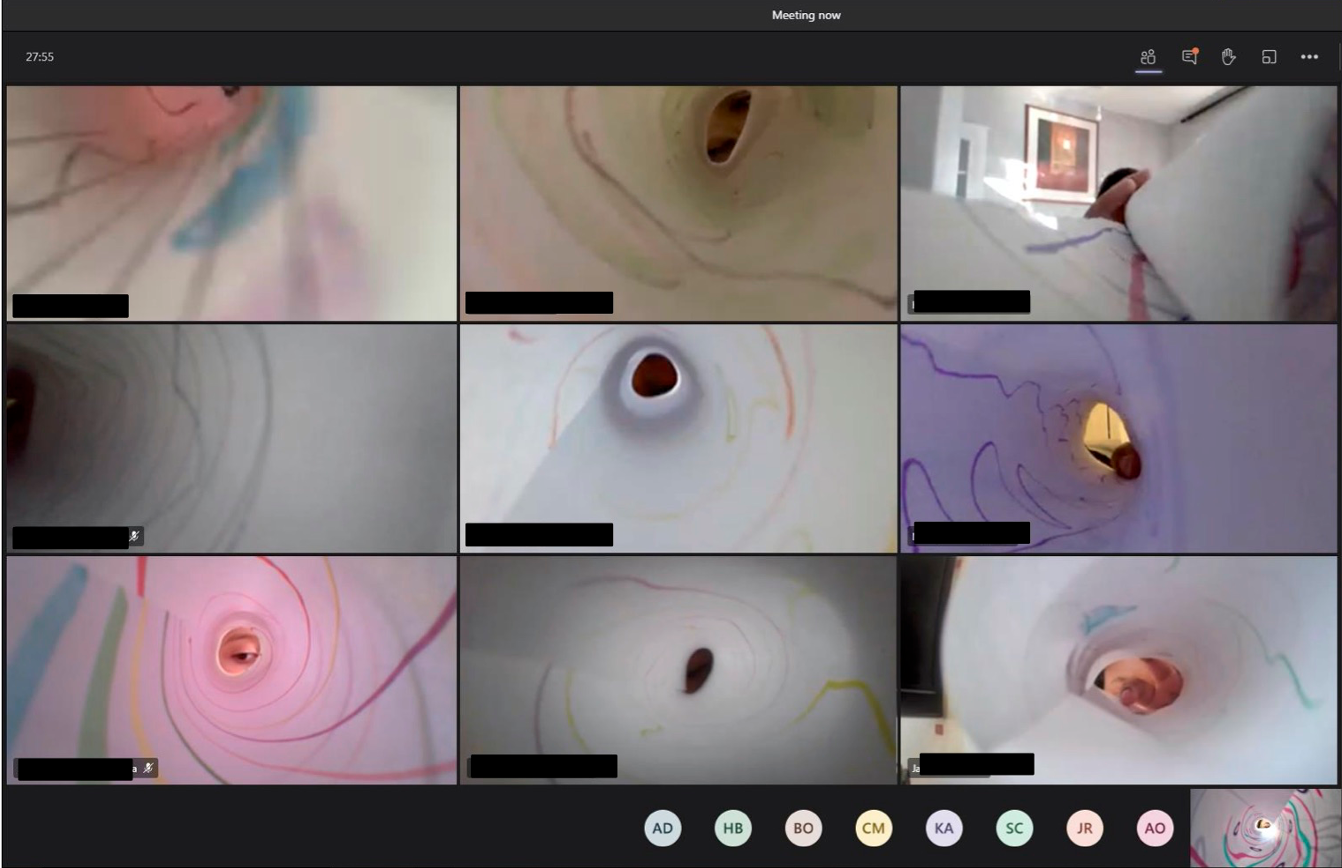
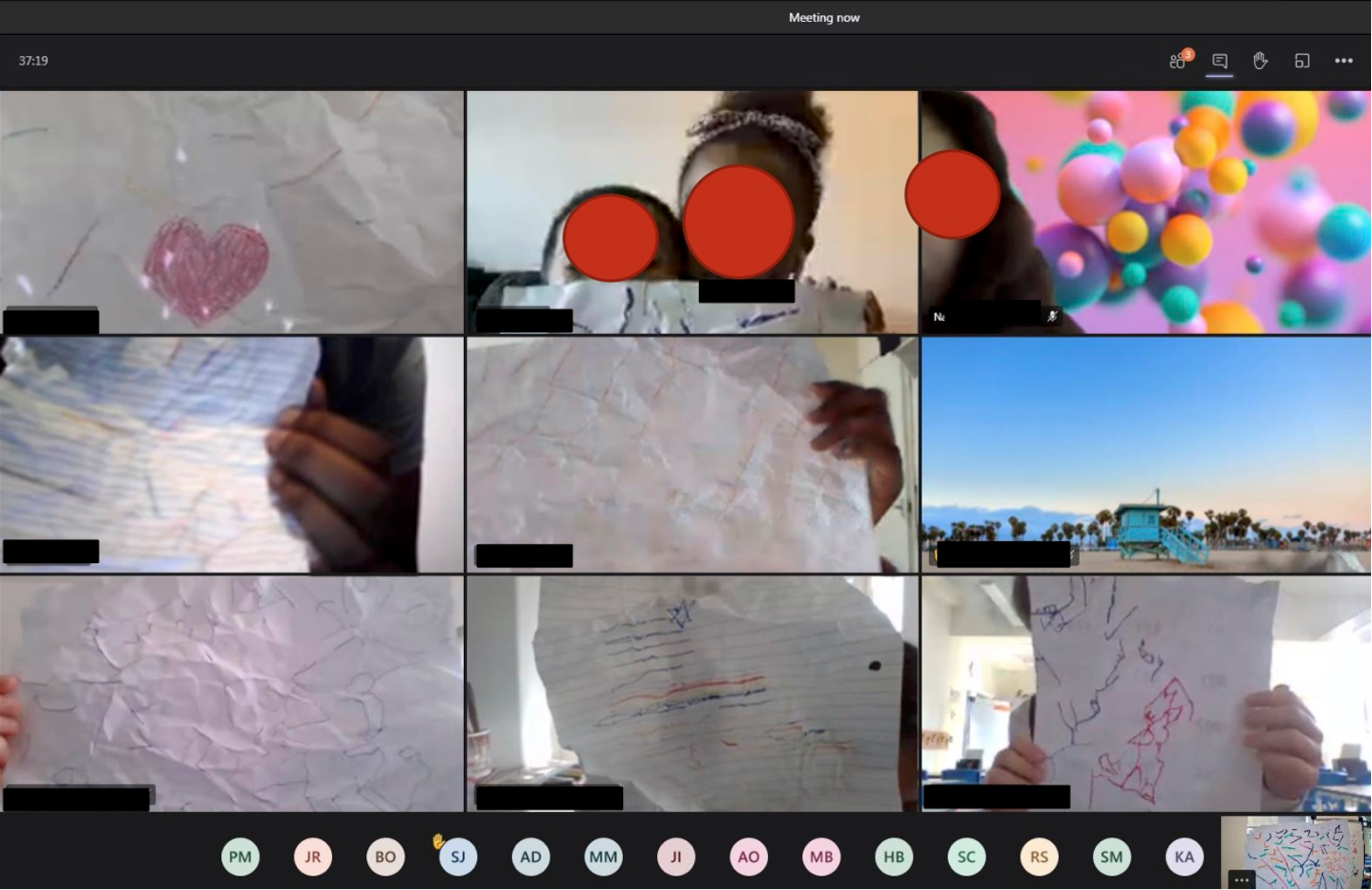
Envisioned as an inclusive, large-scale art performance, the project collaborated with class teachers and children across five primary schools in Camberwell, London, reaching over 1,700 children, many from disadvantaged backgrounds or with special educational needs. The program was co-created and co-led with an art lead and fellow artists, requiring minimal resources and using the camera, sound, and screen to explore performative, conceptual, and sound-based art. Teachers were provided with simple, practical resources, allowing them to introduce alternative art forms confidently without heavy preparation. The approach was always designed to make the event collaborative, ensuring new ideas were introduced without relying on didactic methods.
The event unfolded as one giant, co-created performance on TEAMS, while every child also had the chance to create their own piece of performative art or sculpture. During COVID-19, when children were learning from home, this transformed the flat, rectangular, often silent online format into a collaborative, inclusive, and dynamic creative experience.